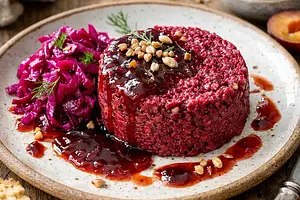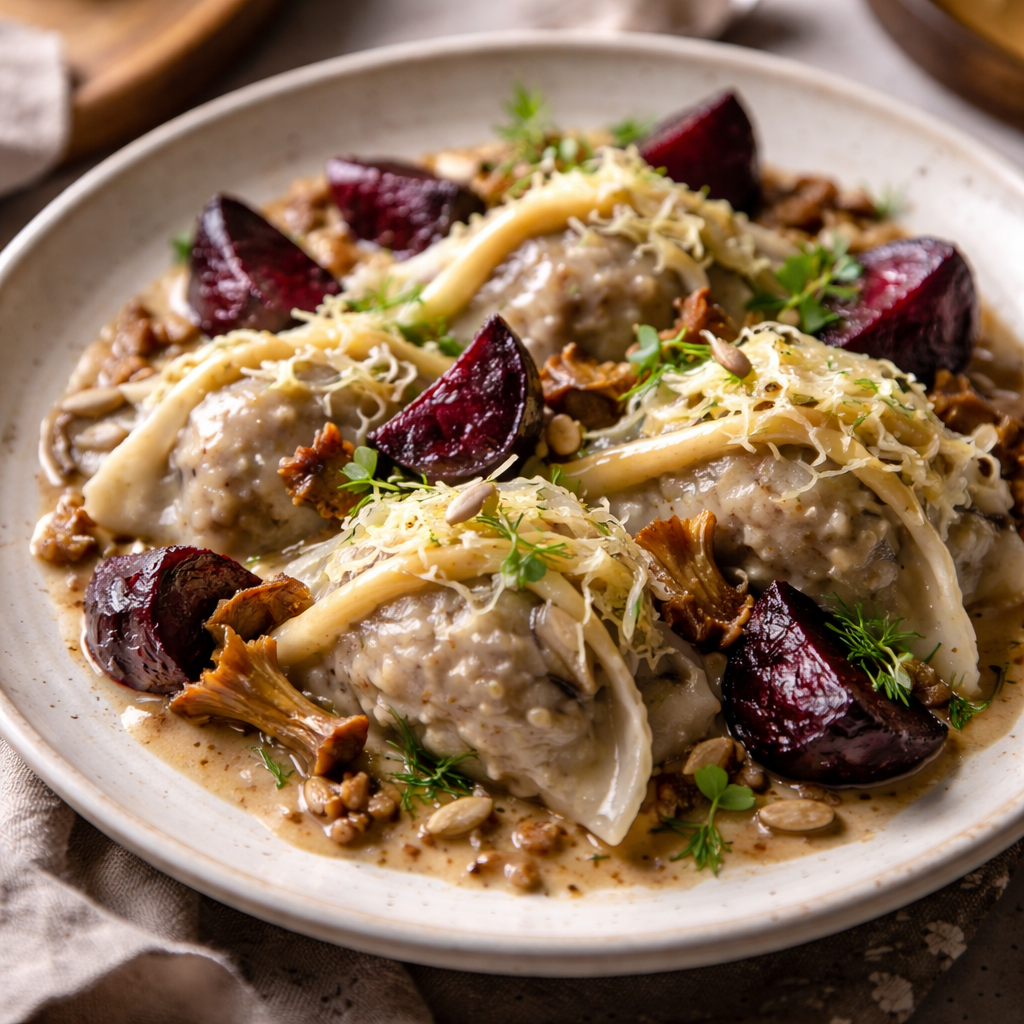
Mushroom Pierogi: steamed ravioli with buckwheat, roasted beets, and sauerkraut in a plum-mustard sauce (vegan version, Polish-European fusion)

Pikantne Plant-based cuisine Fusion cuisine 120 min Medium 40 wyświetleń ~21.56 PLN - (0)
Rate:
(0)
Start Cooking

Description

A creative, plant-based fusion dish combining Polish winter ingredients — buckwheat, roasted beets, sour fermented cabbage, and forest dried mushrooms — in the form of delicate, steamed pierogi/ravioli of Polish-European provenance. The filling is aromatic, juicy, and slightly sweet-sour thanks to the addition of Polish apples and dried plums; the plum-mustard sauce adds a touch of French-European elegance. The dish is visually striking (intense red of the beet, golden edges of the pierogi, dark brown sheen of the sauce) and hearty — perfect for winter lunches, vegan holiday dinners, or when you want to invite friends for something original. Serve warm, optionally with toasted nuts and fresh herbs.

Ingredients Used

Ingredients (17)

Servings:
4
  • raw buckwheat groats 200 g
  • Raw red beet 400 g
  • Sauerkraut (drained) 300 g
  • Dried forest mushrooms 30 g
  • Onion 1 szt.
  • Garlic 2 ząbki
  • Wheat flour 150 g
  • Water 750 ml
  • Rapeseed oil 30 g
  • Dried plums (prunes) 150 g
  • Sarepska grain mustard 2 łyżki
  • Apple (Polish) 1 szt.
  • Vegetable broth (crumbled cube) 10 g
  • 🌿 Przyprawy
  • Salt 0.1 szczypt
  • Ground black pepper 2 szczypty
  • ✨ Opcjonalne
  • Walnuts (toasted) - optional 30 g
  • Fresh parsley - optional 1 pęczek
💰 Szacowany koszt dania: ~21.56 PLN (5.39 PLN/porcję)

💡 Kliknij na składnik aby oznaczyć jako użyty

Preparation steps

Preparing the beets

1

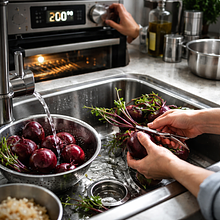
Preheat the oven to 200°C (top-bottom). Wash the beets under running water, cut off the leaves. Wrap each beet individually in aluminum foil tightly. Place on a baking sheet and bake for 60–75 minutes (depending on size) until a knife/skewer inserted in the center goes in smoothly - this is a sign that they are soft. After baking, set aside to cool slightly (10–15 minutes), then remove the foil and allow to cool completely so you can peel the skin off with your fingers or a knife. Cut into small cubes about 5–7 mm.

Ingredients: Raw red beet
Use a baking tray lined with parchment paper. Test the softness of the beet with a stick - if it resists, bake longer. Do not peel hot beets (they burn).
Filling - mushrooms

2

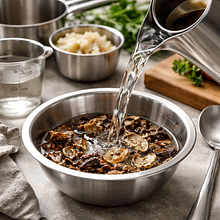
In a medium bowl, add the dried mushrooms (30 g) and pour in 250 ml of hot (not boiling) water. Let it sit for 20–30 minutes until softened. After soaking, strain through a fine sieve to catch any grit; reserve the soaking liquid (after filtering) — use it later for the sauce or braising for deeper flavor. Chop the softened mushrooms into small pieces.

Ingredients: Dried forest mushrooms, Water
Use a glass or ceramic dish. Pour the liquid through a paper filter or a very fine sieve to remove any possible sand. If the mushrooms are tough after 30 minutes, heat the liquid and let it sit for another 10 minutes.

Filling - buckwheat

3

Rinse the buckwheat (200 g) in a sieve under cold running water, shaking the sieve until the water runs clear. In a medium pot, pour in 400 ml of water, add the vegetable broth cube (10 g), and bring to a boil. Add the buckwheat, reduce the heat to low, cover the pot, and cook for 15–18 minutes, until most of the liquid is absorbed. After cooking, let it sit covered for 8–10 minutes, then fluff with a fork.

Ingredients: raw buckwheat groats, Water, Vegetable broth (crumbled cube)
Use a pot with a thick bottom with a capacity of at least 2 liters. The cooked groats should be soft but not mushy; the grains should be separate. If there is too much liquid left, drain the excess and simmer for a while over low heat.

Filling - vegetables and frying

4

Finely chop the onion (150 g) and grate or finely chop the garlic (10 g). In a large skillet, heat 15 g of rapeseed oil (1 tablespoon) over medium heat. Add the onion and sauté for 3–4 minutes until it becomes translucent. Add the garlic and sauté for 30–45 seconds, being careful not to burn it. Add the chopped, drained mushrooms and sauté for 6–8 minutes until most of the liquid evaporates and the mushrooms are lightly browned.

Ingredients: Onion, Garlic, Rapeseed oil, Dried forest mushrooms
The best is a pan with a diameter of 26–28 cm with a non-stick coating. Use a wooden spoon for stirring. Do not burn the garlic — if it starts to brown, lower the heat.

Filling - combining ingredients

5

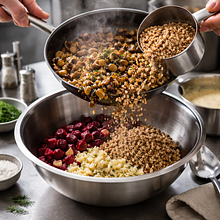
To the pan with mushrooms, add the drained sauerkraut (300 g), finely chopped, diced roasted beets (about 400 g after roasting and peeling), grated apple (150 g) on a coarse grater, and diced dried plums (about 80 g in total). Add 1 tablespoon of mustard (about 15 g from the prepared amount). Sauté everything over medium heat for 6–8 minutes, stirring, until the ingredients are combined and the excess moisture evaporates. Season with 1 pinch of salt and 1 pinch of pepper, taste, and adjust salt if necessary.

Ingredients: Sauerkraut (drained), Raw red beet, Apple (Polish), Dried plums (prunes), Sarepska grain mustard, Salt, Ground black pepper
If the filling is too wet, sauté it longer or add 1–2 tablespoons of cooked, soaked groats to thicken it. The filling should be firm, not watery.

Filling - final seasoning and mixing with the groats

6

Transfer the sautéed vegetables and mushrooms to a large bowl. Add the cooked buckwheat (200 g) and gently mix, mashing some of the grains with a fork so that the mixture is cohesive but still chunky. Check the taste and season to your liking (salt, pepper, a bit of mustard). The filling should be moist but firm enough to easily shape portions.

Ingredients: raw buckwheat groats, Dried forest mushrooms, Raw red beet, Sauerkraut (drained), Apple (Polish), Dried plums (prunes), Sarepska grain mustard
Use a large bowl (at least 3 L). If the filling is too dry, add 1–2 tablespoons of the reserved soaking liquid from the mushrooms; if too wet, add 1–2 tablespoons of flour.

Dough (for ravioli/pierogi)

7

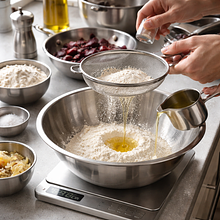
In a large bowl, sift the flour (150 g). Add a pinch of salt, 15 g of rapeseed oil (1 tablespoon), and gradually pour in 100 ml of warm water (about 35–40°C), mixing with a wooden spoon until the ingredients are combined. Transfer to a work surface and knead by hand for 6–8 minutes until the dough is smooth and elastic (not sticky to the hands). If the dough is dry, add water by the tablespoon; if too sticky — lightly dust with flour. Wrap in plastic wrap and let rest for 20 minutes at room temperature.

Ingredients: Wheat flour, Rapeseed oil, Water, Salt
Use a wooden pastry board or a clean countertop. If you have a mixer with a dough hook, knead for 4–5 minutes. Do not knead too long - the dough will become tough.

Shaping dumplings/ravioli

8

Divide the dough into 2 parts. Roll out one part to a thickness of about 2 mm (using a rolling pin), dusting lightly with flour. Using a glass with a diameter of about 7–8 cm or a cutter, cut out circles. Place a teaspoon (about 18–20 g) of filling in the center of each circle. Moisten the edge of the dough with water using your finger, fold in half, and seal the edges tightly, removing the air; create a scalloped edge or press with a knife. Place on a floured board.

Ingredients: Wheat flour, Water, raw buckwheat groats
Use a rolling pin and a cutter with a diameter of 7–8 cm for shaping. Make sure the edges are well sealed — otherwise, they may open during cooking.

Cooking - steaming

9

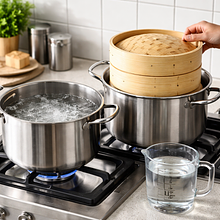
In a pot, bring 1 liter of water to a boil and prepare a steamer/pot for steaming (bamboo steamer or metal basket). Line the bottom of the steamer with parchment paper with slits for steam or cabbage leaves, so the dumplings do not stick. Arrange the dumplings with space in between so they do not touch. Steam in batches for 8–10 minutes over medium heat - the dough should become slightly translucent, and the filling warm. Test: touch one - it should be elastic, not raw inside.

Ingredients: Water, raw buckwheat groats
If you don't have a steamer, use a colander placed over a pot of boiling water. Do not seal the steamer tightly - steam must circulate.

Optional sautéing

10

For contrast in textures, heat 1 tablespoon (15 g) of oil in a pan. Briefly fry the previously steamed dumplings for 1–2 minutes on each side, until the edges are slightly browned and crispy. Be careful not to damage them – use a spatula.

Ingredients: Rapeseed oil
A 26 cm non-stick frying pan is best. This step is optional - it provides a contrast between the soft interior and the crispy crust.

Plum-Mustard Sauce

11

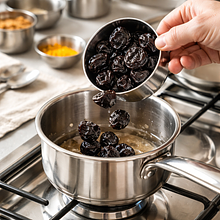
In a small pot, place the remaining dried plums (about 70 g left from the total amount), and pour in 150 ml of the strained liquid from soaking the mushrooms or warm water. Bring to a gentle boil and cook for 8–10 minutes until the plums soften. Add 15 g of mustard and blend with an immersion blender until smooth. If the consistency is too thick, add 1–2 teaspoons of water. Season with a pinch of salt and pepper. The sauce should be slightly sweet and sour, smooth, and glossy.

Ingredients: Dried plums (prunes), Sarepska grain mustard, Water
Use a hand blender or a jug blender. If you want a sauce with texture, do not blend completely and leave pieces of plum.

Assembly and serving

12

On a heated plate, arrange 6–8 dumplings (depending on size and portion). Drizzle each with a thin layer of plum-mustard sauce. Sprinkle with finely chopped, lightly toasted walnuts (optional 30 g) and fresh parsley (optional 1 bunch = 30 g). Serve immediately to keep the dough soft and the sauce glossy.

Ingredients: Walnuts (toasted) - optional, Fresh parsley - optional, Dried plums (prunes)
Use flat, warm plates. If preparing in advance, store the sauce separately and drizzle just before serving.

Final tips

13

Check the final balance of flavors: it should be slightly sour (cabbage, plum), sweetish (beet, apple, plum), and umami (mushrooms). If necessary, add a bit of mustard to the filling or sauce. Serve with additional wedges of fresh apple on the side for contrast.

Ingredients: Sarepska grain mustard, Apple (Polish)
Taste as you go — in winter, the cabbage may be more sour; adjust the amount of plums and apple in the filling.

Fun Fact

💡

In Polish tradition, combining sweet beetroot with a sour addition (e.g., cabbage or cucumber) is common; here we used this approach by adding plum and mustard, which brings flavors known in Central European and French cuisine.

Best for

Tips

🍽️ Serving

Serve on warm plates, drizzled with freshly prepared warm plum-mustard sauce. For crunch, add toasted walnuts and chopped parsley. As a side, I suggest a slightly sour pickled cucumber or a plate of sauerkraut.

🥡 Storage

Store the dumplings and sauce separately in the fridge for up to 2 days (in an airtight container). Steam the dumplings for 6–8 minutes or heat them in a pan with a little water covered, to regain their softness. Gently heat the sauce over low heat and possibly thin it with water.

📸 Ugotowane przez społeczność

Zaloguj się, aby dodać zdjęcie
Dodaj zdjęcie gotowej potrawy

Po zatwierdzeniu przez moderatora otrzymasz 10 punktów doświadczenia.

🍲

Nikt jeszcze nie dodał zdjęcia. Bądź pierwszy!

Comments (0)

Be the first to comment on this recipe!

Add a comment

You might also like

Recipe Categories

Plant-based recipes that are healthy and full of flavor, perfect for those seeking alternatives to traditional animal ingredients.

See all recipes in this category

Fusion cuisine is a bold combination of culinary traditions from different corners of the world. Asian-European pairings, Mexican-Japanese experiments, and Mediterranean-Asian fusions. Sushi burritos, ramen burgers, kimchi pierogi, and curry pizza - the boundaries of flavor do not exist. Our reci...

See all recipes in this category
Reklama