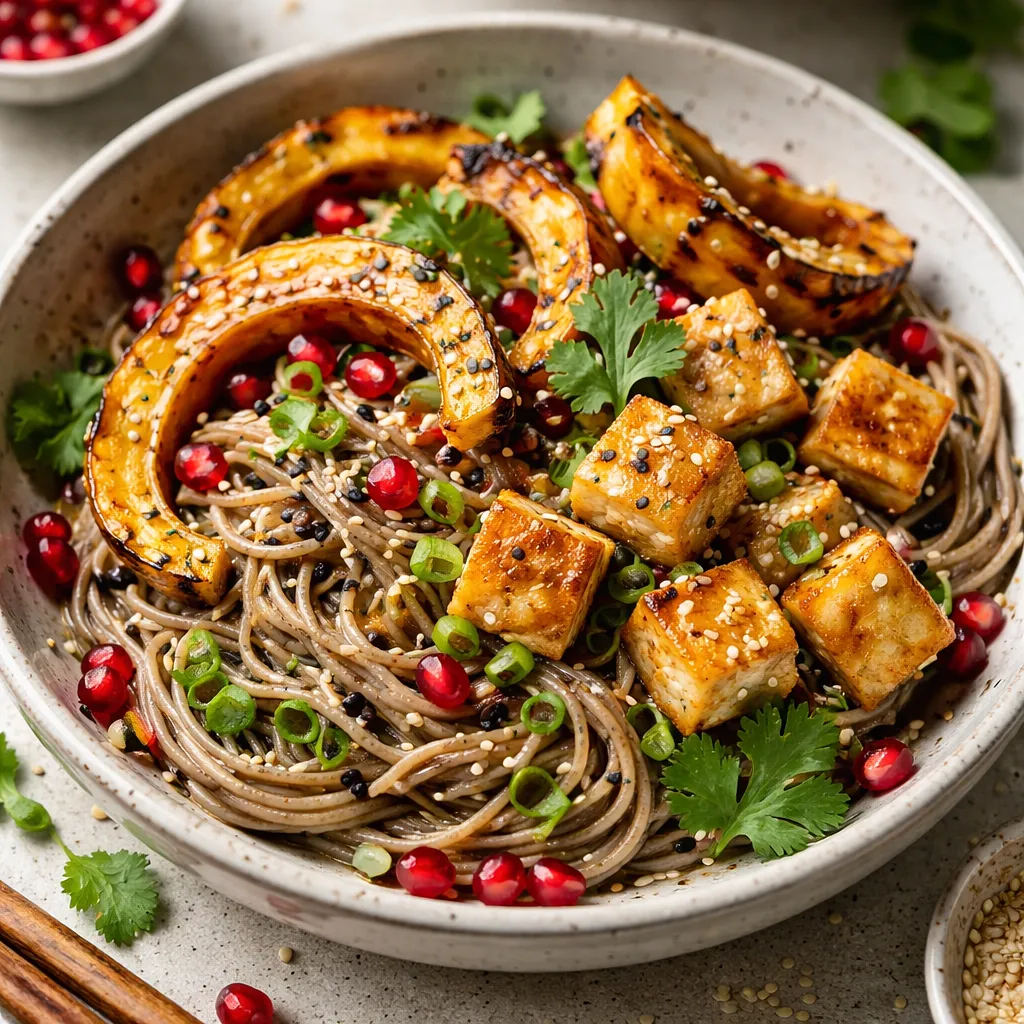
Soba fusion with roasted kabocha squash, crispy tofu, and pomegranate (variant 033f8c03)

Pikantne Asian Fusion Cuisine Main dishes Vegan dishes 90 min Medium 11 wyświetleń ~58.64 PLN - (0)
Rate:
(0)
Start Cooking

Description

Seasonal fusion: delicate soba noodles combined with caramelized kabocha squash in a miso-maple glaze, crispy, lightly spiced tofu, and an explosion of freshness from pomegranate seeds and quickly sautéed pak choi. The dish blends Japanese inspirations (soba, miso, sesame) with Western winter ingredients (kabocha, maple syrup, nuts), creating a stunning composition of flavors and colors. Perfect as a main dish for the autumn-winter season — it has a contrasting texture: soft, creamy squash, springy noodles, crispy tofu, and juicy pomegranate. Serve hot, garnished with toasted sesame seeds, chives, and optional nuts for an extra crunch.

Ingredients Used

Ingredients (22)

Servings:
4
  • Soba noodles 320 g
  • Kabocha (Hokkaido pumpkin) 800 g
  • Firm tofu 400 g
  • Light miso paste 80 g
  • Maple syrup 60 ml
  • Tamari (gluten-free soy sauce) 40 ml
  • Rice vinegar 30 ml
  • Sesame oil 20 ml
  • Garlic 3 ząbki
  • Green onion 2 pęczki
  • Pomegranate seeds 120 g
  • Pak choi 2 szt.
  • Rapeseed oil for frying 30 g
  • Lemon juice 30 ml
  • Cornstarch 20 g
  • Roasted sesame seeds 20 g
  • 🌿 Przyprawy
  • Salt 0.1 szczypt
  • Black pepper 2 szczypty
  • ✨ Opcjonalne
  • Pickled red cabbage 100 g
  • Roasted cashews 50 g
  • Chili flakes 5 szczypt
  • Microgreens (mixed sprouts) 30 g
💰 Szacowany koszt dania: ~58.64 PLN (14.66 PLN/porcję)

💡 Kliknij na składnik aby oznaczyć jako użyty

Preparation steps

Preparing the pumpkin

1

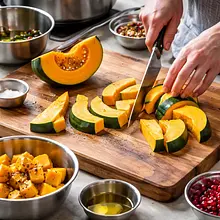
Preheat the oven to 200°C (fan 190°C). Prepare the kabocha: place the squash on a cutting board, cut it in half with a sharp knife, and scoop out the seeds with a spoon (you can set them aside to roast separately). Cut the halves into slices, then into cubes with sides of 2-3 cm — the skin of Hokkaido is edible after roasting, so do not peel it. Place the chopped squash in a large bowl.

Ingredients: Kabocha (Hokkaido pumpkin)
Use a heavy, sharp knife and a stable cutting board. If the pumpkin is hard, first score the skin and tilt the piece to make it easier to cut. Slices of this size bake evenly and maintain their structure.
2

In a bowl, combine 40 g of miso paste, 30 ml of maple syrup (reserve 30 ml for the sauce), 15 ml of tamari, and 10 ml of sesame oil. Mix vigorously with a spoon until you achieve a smooth glaze. Transfer the pumpkin to a baking sheet lined with parchment paper, brush half of the glaze with a pastry brush or spoon, arranging the pieces in a single layer (do not overlap). Bake for 25-30 minutes until the edges start to caramelize and the softness is such that a fork can easily pierce through.

Ingredients: Kabocha (Hokkaido pumpkin), Light miso paste, Maple syrup, Tamari (gluten-free soy sauce), Sesame oil
Use a silicone brush to evenly spread the glaze. If the glaze is too thick, you can add 5-10 ml of water. The pumpkin is ready when a fork easily pierces the flesh and the edges have slight dark brown spots.

Preparing tofu

3

Prepare the tofu: remove the block from the packaging, drain the liquid, wrap the tofu in several layers of paper towels, and place it on a plate. Place a heavy object on top (e.g., a pan with a can) and press down for 15 minutes to drain excess water. Then cut the tofu into cubes of about 2 cm.

Ingredients: Firm tofu
Use an equal weight on the button, without tilting the plate. Well-drained tofu gets a crispier crust. If you have a tofu press, use it and press for 30 minutes.
4

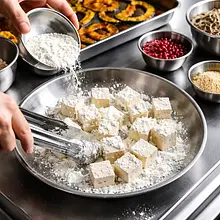
Pour 20 g of cornstarch into a large bowl or on a plate and coat each tofu cube in it, ensuring the surface is thinly covered. Heat 30 ml of rapeseed oil in a pan over medium-high heat. When the oil is hot (a splash of water should sizzle), place the tofu cubes in a single layer and fry for 3-4 minutes on each side until they achieve a golden-brown, crispy color. Place the fried cubes on a paper towel to drain excess fat.

Ingredients: Firm tofu, Cornstarch, Rapeseed oil for frying
Use a wide skillet so the cubes do not touch too closely — this will allow for even browning. Gently turn with a spatula. If the skillet is smoking, reduce the heat.

Miso-ponzu sauce

5

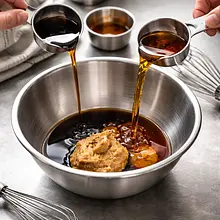
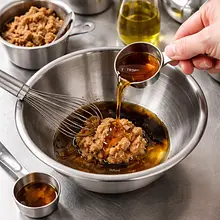
In a medium bowl, combine the remaining 40 g of miso paste, the remaining 30 ml of maple syrup, 25 ml of tamari, 30 ml of rice vinegar, 30 ml of lemon juice, 10 ml of sesame oil, and 15 ml of water. Add finely grated or pressed garlic (10 g from the amount) and optionally 5 g of chili flakes if you want some heat. Whisk or fork until smooth — the sauce should be shiny and not too thick; adjust the consistency with a spoonful of water.

Ingredients: Light miso paste, Maple syrup, Tamari (gluten-free soy sauce), Rice vinegar, Lemon juice, Sesame oil, Garlic, Chili flakes
Use a metal or wooden spoon; the sauce can be prepared in advance. Check the balance: if it's too salty, add 5-10 ml of maple syrup or a little water; if it's too sour, add more syrup.

Vegetables and pickles

6

Prepare the pak choi: trim the thicker ends, cut in half lengthwise, and if larger, chop into pieces. In a wide skillet, heat 10 ml of sesame oil (or 10 ml of rapeseed oil + 5 ml of sesame oil for flavor) over medium heat. Add 30 g of chopped green onion (white part) and sauté for 30-45 seconds until softened. Add the pak choi and 1 g of salt, sauté for 1.5-2 minutes until the leaves wilt and the stems are still slightly crunchy. If using pickled red cabbage (optional), drain it and prepare for serving.

Ingredients: Pak choi, Green onion, Sesame oil, Salt, Pickled red cabbage
The best is a wide wok or a large frying pan for quick frying. Fry quickly over high heat to keep the vegetables' vibrant color and crunchiness.

Cooking pasta

7

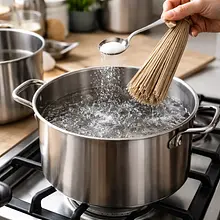
In a large pot, bring 3 liters of water to a boil. Add 10 g of salt to the water. Drop in the soba noodles and cook according to the package instructions, usually 4-5 minutes (test after 3.5 minutes). The noodles should be al dente — soft but firm. Drain the noodles, rinse them under cold running water (to stop the cooking process and remove excess starch), drain well, and drizzle with 10 ml of sesame oil to prevent sticking.

Ingredients: Soba noodles, Salt, Sesame oil
Use a large pot so the noodles have space. Rinsing with cold water is typical for soba — it removes excess starch and cools the noodles. Don't leave the noodles in the water for too long, as they will become gummy.

Assembly and serving

8

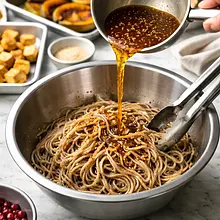
In a large mixing bowl, combine the drained soba noodles with 3/4 of the prepared miso-ponzu sauce (reserve some sauce for drizzling on top). Gently toss with a fork or tongs to evenly coat the noodles with the sauce. In the center of the plates/bowls, place a portion of the noodles, and evenly distribute the cubes of crispy tofu, pieces of roasted kabocha squash, and sautéed pak choi around and on top. Sprinkle with pomegranate seeds, toasted sesame seeds, and thinly sliced green onions (the remaining part). For a contrast in texture, optionally add toasted cashews and/or microgreens. Finally, drizzle with a bit of the reserved sauce and serve immediately.

Ingredients: Soba noodles, Firm tofu, Kabocha (Hokkaido pumpkin), Pomegranate seeds, Roasted sesame seeds, Green onion, Pickled red cabbage, Roasted cashews, Microgreens (mixed sprouts), Light miso paste, Maple syrup, Tamari (gluten-free soy sauce), Sesame oil
Use two large flat plates or one large serving bowl. Layer the ingredients: pasta at the bottom, then pumpkin and tofu, followed by fresh pomegranate seeds — it looks impressive. If you have children or they don't like spicy food, avoid adding chili flakes on top.

Finishing and taste control

9

Try one serving and season with salt (very sparingly) and freshly ground pepper if needed. If the sauce seems too salty, add a little lemon juice (5-10 ml) or a teaspoon of maple syrup. Serve immediately to keep the tofu crispy.

Ingredients: Lemon juice, Salt, Black pepper
It's a good idea to prepare the sauce at the end to have control over the balance of flavors. Always season after combining the ingredients, as the roasted pumpkin and tamari already add salt.

Fun Fact

💡

Kabocha (Hokkaido pumpkin) is popular in Japanese cuisine and often used in autumn-winter dishes — its sweet flesh beautifully complements the umami of miso. The combination of miso and maple syrup is an example of culinary fusion that brings together Japanese and North American flavors.

Best for

Tips

🍽️ Serving

Serve the dish hot, preferably on large flat plates to showcase the color contrast. Use bright decorative elements (pomegranate, microgreens) and a drizzle of extra sauce just before serving. For a gluten-free version, make sure the soba noodles are 100% buckwheat or use a gluten-free variant.

🥡 Storage

Store separately: pasta with sauce for up to 24 hours in the fridge in an airtight container, and crispy tofu and roasted pumpkin separately (the pumpkin can be gently reheated in the oven at 180°C for 8-10 minutes, tofu can be reheated in a dry pan for 3-4 minutes to regain its crispiness). Store the sauce in a separate jar for up to 5 days. It is not recommended to combine everything before longer storage, as the textures will lose their contrast.

📸 Ugotowane przez społeczność

Zaloguj się, aby dodać zdjęcie
Dodaj zdjęcie gotowej potrawy

Po zatwierdzeniu przez moderatora otrzymasz 10 punktów doświadczenia.

🍲

Nikt jeszcze nie dodał zdjęcia. Bądź pierwszy!

Comments (0)

Be the first to comment on this recipe!

Add a comment

You might also like

Recipe Categories

Modern recipes that combine traditional flavors of Asia with other culinary cultures, offering unusual combinations and innovative dishes.

See all recipes in this category

Main courses are the heart of every meal - hearty, nutritious, and full of flavor. In this category, we present a rich selection of recipes for lunches and dinners that will satisfy even the most discerning palates. From classic Polish pork chops to aromatic chicken dishes, to exquisite steaks an...

See all recipes in this category

Vegan cuisine features delicious dishes without animal products - healthy, ethical, and environmentally friendly. Plant-based protein: tofu, tempeh, soy, lentils, chickpeas, and beans take center stage. Vegan dairy substitutes: plant milks, cashew cheese, and vegan yogurts. Recipes for vegan burg...

See all recipes in this category
Reklama