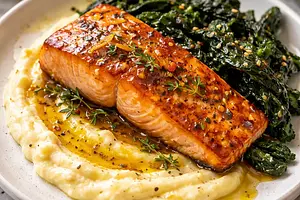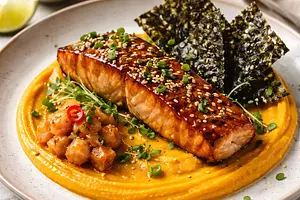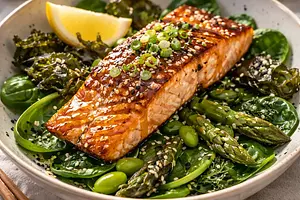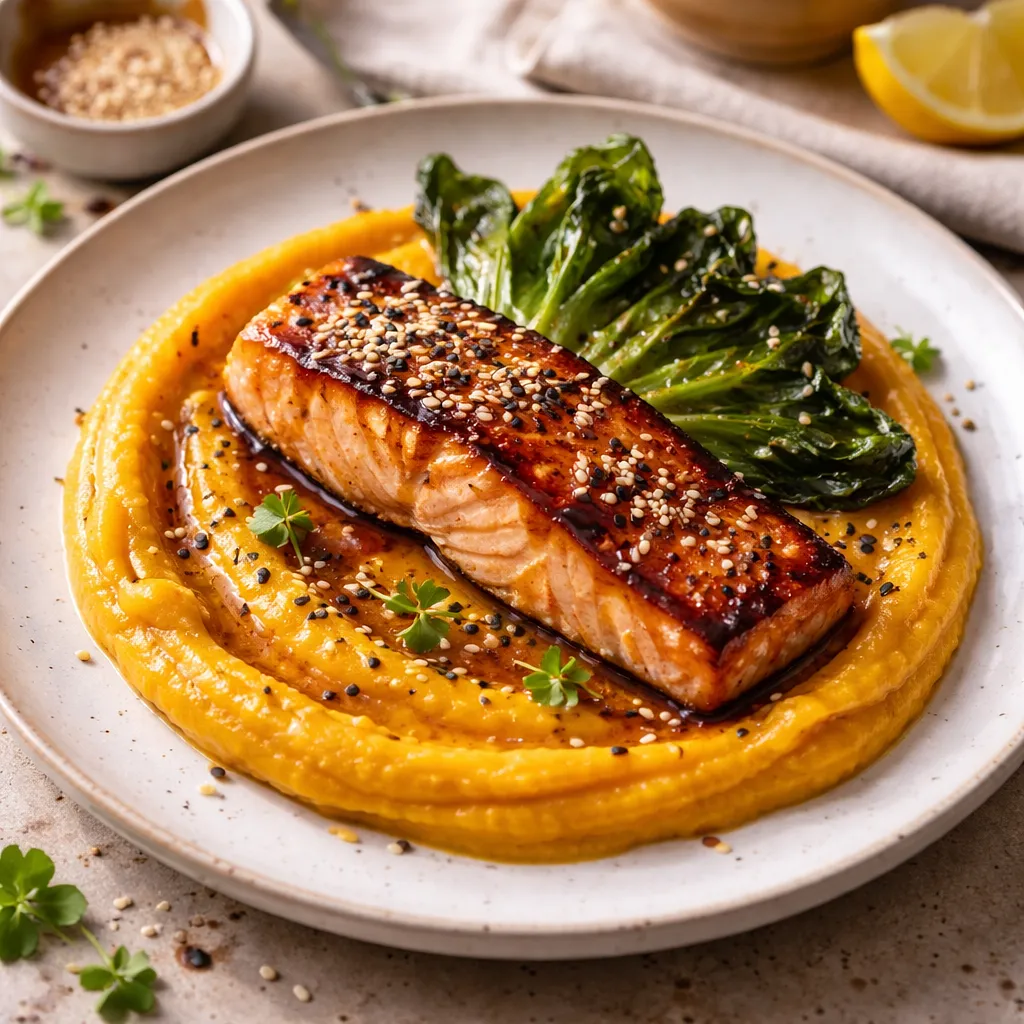
Miso-glazed salmon on kabocha pumpkin puree with crispy pak choi and toasted sesame

Pikantne Asian Fusion Cuisine Main dishes 75 min Medium 8 wyświetleń ~81.58 PLN - (0)
Rate:
(0)
Start Cooking

Description

A modern dish of fusion Asian cuisine: juicy salmon fillet in a glossy miso-honey glaze, served on velvety kabocha squash puree and with crispy, quickly sautéed pak choi. The combination of the salty-sweet glaze, nutty sesame notes, and the delicate sweetness of the squash creates a dish full of contrasting flavors and textures — creamy puree, tender salmon, and slightly crunchy vegetables. Perfect for an elegant dinner when you want to impress with taste and appearance. Aesthetically presented — the intense orange puree with green accents and the dark brown glaze on the fish is visually appealing and pairs wonderfully with a light white wine or sake.

Ingredients Used

Ingredients (18)

Servings:
4
  • Skinless salmon fillet 800 g
  • White miso (shiro miso) 60 g
  • Mirin 30 ml
  • Soy sauce (reduced sodium) 30 ml
  • wildflower honey 30 g
  • Fresh ginger 20 g
  • Garlic 2 ząbki
  • Lime 2.4 szt.
  • Pak choi (bok choy) 400 g
  • Shallot 60 g
  • Sesame oil 15 ml
  • Rapeseed oil 30 g
  • Butter 20 g
  • Sea salt 3 g
  • butternut squash 600 g
  • 🌿 Przyprawy
  • Ground black pepper 2 szczypty
  • ✨ Opcjonalne
  • Toasted sesame seeds 20 g
  • Dried chili flakes 1 łyżeczka
💰 Szacowany koszt dania: ~81.58 PLN (20.40 PLN/porcję)

💡 Kliknij na składnik aby oznaczyć jako użyty

Preparation steps

Marinade and glaze

1

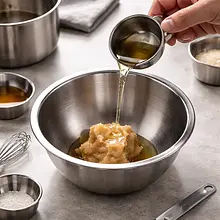
Prepare the miso-honey glaze: in a medium bowl, place 60 g of white miso, add 30 ml of mirin, 30 ml of soy sauce, and 30 g of honey. Peel and finely grate 20 g of fresh ginger (use a fine grater) and finely chop or press 10 g of garlic (2 cloves) through a garlic press. Add the grated zest of one lime and squeeze in a tablespoon of juice (about 15 ml). Mix the ingredients with a whisk or spoon until smooth and homogeneous. The consistency should be thick, glossy, and easy to spread — if it is too thick, add 1-2 teaspoons of water.

Ingredients: White miso (shiro miso), Mirin, Soy sauce (reduced sodium), wildflower honey, Fresh ginger, Garlic, Lime
Use a ceramic or glass bowl and a small whisk. If the miso has lumps, mash it thoroughly. Do not heat the miso directly over the fire — only add liquids to it when everything has cooled down or before the final glazing.
Pumpkin puree

2

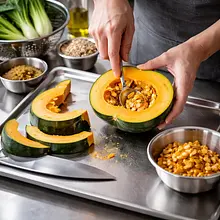
Prepare the pumpkin: cut the kabocha pumpkin in half (carefully — the skin is hard) and remove the seeds with a spoon. Cut the flesh into irregular pieces about 3-4 cm. Preheat the oven to 200°C (top-bottom). Place the pumpkin pieces on a baking sheet lined with parchment paper, drizzle with 1 tablespoon (15 g) of rapeseed oil, and gently sprinkle with 1/2 teaspoon (about 1.5 g) of sea salt. Bake for 30–35 minutes until the pumpkin is soft — you can check this with a fork: the fork should go in easily, and the flesh will fall apart.

Ingredients: butternut squash, Rapeseed oil, Sea salt
Use a sharp knife to cut the pumpkin and a stable cutting board. If you don't have an oven, you can steam the pumpkin in a pot (about 20 min) — the puree will be less caramelized.
3

After baking, transfer the hot pumpkin to a blender or a large bowl. Add 20 g of butter and 1 tablespoon (15 g) of sesame oil (it will add a nutty aroma, but do not overheat it later). Blend until smooth or use an immersion blender. Season to taste with 1/2 teaspoon (about 1.5 g) of sea salt and freshly ground pepper (about 1 pinch). The consistency should be creamy and lump-free; if it is too thick, add 1-2 tablespoons of the pumpkin roasting water or warm water.

Ingredients: butternut squash, Butter, Sesame oil, Sea salt, Ground black pepper
Use a jug blender or an immersion blender. Do not blend too long at very high speeds (it may get hot). Taste and season carefully — the miso in the glaze will also add salt.

Crispy Vegetables

4

Prepare the pak choi: separate the leaves, cut the thicker stems in half lengthwise, and chop the stalks into 2-3 cm pieces. Finely chop 60 g of shallots. Heat a large pan (preferably 26–28 cm) over medium-high heat, and pour in 1 tablespoon (15 g) of rapeseed oil. When the oil is lightly smoking (about 3–4 minutes of heating), add the shallots and sauté for 1–2 minutes until softened and slightly translucent. Add the pak choi and stir-fry for 3–4 minutes — the leaf pieces should soften while the stalks remain slightly crunchy. At the end, drizzle with 1 teaspoon of sesame oil and gently season with salt (a pinch) and pepper. The pak choi should be bright, firm, and have slightly brown edges.

Ingredients: Pak choi (bok choy), Shallot, Rapeseed oil, Sesame oil, Sea salt, Ground black pepper
Use a wide skillet or wok. Do not overcrowd the pan — it's better to fry in batches so the vegetables don't steam. If the pak choi releases a lot of water, increase the heat and fry until the excess evaporates.

Preparing the salmon

5

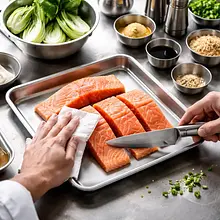
Prepare the salmon fillets: pat them dry with a paper towel. Cut the fillets into 4 equal portions (200 g each). Season each portion lightly with salt (remember that the glaze is salty) and freshly ground pepper. Heat a large cast iron or non-stick skillet over medium-high heat, and pour in 1 tablespoon (15 g) of canola oil. When the oil starts to shimmer gently, place the fillets in the skillet (presentation side down). Cook for 3–4 minutes without flipping, until the sides begin to set into a uniform, matte texture and the fish easily releases from the skillet.

Ingredients: Skinless salmon fillet, Sea salt, Ground black pepper, Rapeseed oil
Use tongs or a spatula to flip. Don't move the fish around constantly — let it brown nicely. The pan temperature should be high, but not smoking heavily.
6

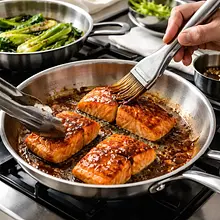
After 3–4 minutes, flip the fillets to the other side and immediately brush each portion generously (about 1 tablespoon = 15 g) with the prepared miso-honey glaze. Cook for another 2 minutes to allow the glaze to start to caramelize slightly, then transfer the fillets to a baking sheet and place under a very hot grill/oven (broil) for 1–2 minutes, until the glaze caramelizes and develops dark brown highlights. If you don't have a broil function, you can leave the fillets in the pan and gently cover the pan for 1–2 minutes to allow the glaze to set.

Ingredients: Skinless salmon fillet, White miso (shiro miso), wildflower honey, Mirin, Soy sauce (reduced sodium), Fresh ginger, Garlic, Lime
Use a kitchen brush to apply the glaze. Be careful not to burn the glaze — broiling works quickly; keep an eye on it. The fish is done when it flakes easily with a fork and the center is slightly pink (a pink center indicates juiciness).

Assembly and serving

7

Heat the pumpkin puree if it has cooled down — preferably in a pot over low heat for a minute while stirring. On a plate, spread 2–3 tablespoons of the puree in the center and shape it into an oval with a spatula. Next to it, place a portion of pak choi (about 100 g) and lay the glazed salmon fillet on the puree. Drizzle everything with 1 teaspoon of fresh lime juice for freshness. Sprinkle the top with toasted sesame seeds (optional) and a bit of chili flakes if you want to add some heat. For decoration, you can add thin strips of lime zest.

Ingredients: Skinless salmon fillet, butternut squash, Pak choi (bok choy), Lime, Toasted sesame seeds, Dried chili flakes
Use a large spoon to scoop the puree and a brush to spread the glaze. Serve immediately — the dish tastes best warm, before the puree cools down and before the glaze loses its shine.

Cleaning and Final Tips

8

After preparing, clean the used dishes: rinse the glazed bowls in warm water, wipe the frying pan with a paper towel and wash it. Make sure that no miso leftovers are forgotten — dried miso is harder to remove.

Use warm water and a sponge with a bit of dish soap. If the glaze has dried on the brush, soak it in hot water before washing.

Fun Fact

💡

Miso is a traditional Japanese fermented paste, known for hundreds of years; it is used not only in soups but also for glazes — thanks to its enzymes and umami, it can enhance the natural flavor of fish and vegetables.

Best for

Tips

🍽️ Serving

Serve hot, immediately after preparation. For a flavor contrast, you can add a small portion of sour kimchi on the side. A dry white wine (e.g., riesling) or slightly chilled sake pairs well with the dish.

🥡 Storage

Store the salmon and puree separately in airtight containers in the refrigerator for up to 24 hours. The puree can be reheated over low heat with a little water; the salmon is best eaten fresh — it loses some texture when reheated. Do not store the glaze separately for more than 48 hours.

📸 Ugotowane przez społeczność

Zaloguj się, aby dodać zdjęcie
Dodaj zdjęcie gotowej potrawy

Po zatwierdzeniu przez moderatora otrzymasz 10 punktów doświadczenia.

🍲

Nikt jeszcze nie dodał zdjęcia. Bądź pierwszy!

Comments (0)

Be the first to comment on this recipe!

Add a comment

You might also like

Recipe Categories

Modern recipes that combine traditional flavors of Asia with other culinary cultures, offering unusual combinations and innovative dishes.

See all recipes in this category

Main courses are the heart of every meal - hearty, nutritious, and full of flavor. In this category, we present a rich selection of recipes for lunches and dinners that will satisfy even the most discerning palates. From classic Polish pork chops to aromatic chicken dishes, to exquisite steaks an...

See all recipes in this category
Reklama