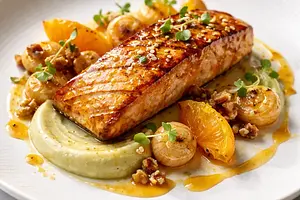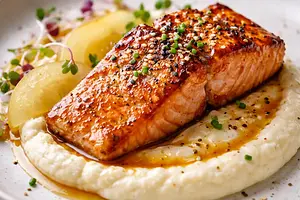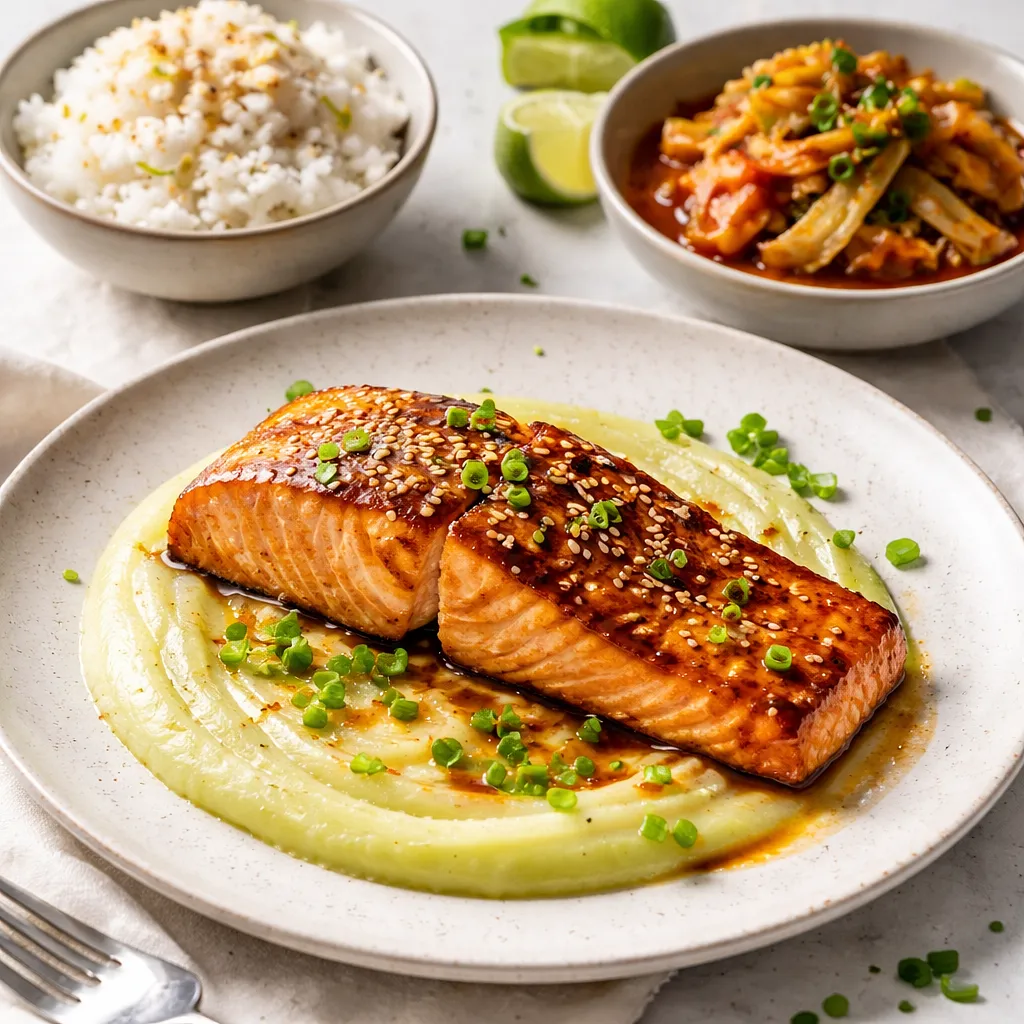

A modern Asian fusion dish that combines rich, juicy salmon glazed with miso paste and yuzu/orange syrup, served with velvety celery puree, aromatic coconut turmeric rice, and spicy, crunchy quick red cabbage and daikon kimchi garnished with pomegranate seeds. The dish is seasonal (winter citrus, pomegranate), visually striking due to the contrast of the golden glazed fillet, white puree, and purple kimchi, and well-balanced in flavor: umami from the miso, acidity and freshness from the citrus, creaminess from the celery and coconut rice base, and a spicy, slightly fermented note from the kimchi. It works wonderfully as an exquisite main course for a dinner party or a romantic meal. Serve immediately after preparation, garnished with green onions and pomegranate seeds for color and crunch.
Prepare the miso-yuzu glaze: in a medium bowl, combine 60 g of white miso, 120 ml of blood orange juice, 60 g of honey, 40 ml of soy sauce, 10 ml of sesame oil, 10 g of finely chopped garlic, and 20 g of grated ginger. Use a whisk to thoroughly mix the miso paste into the liquids and achieve a uniform, slightly thick emulsion.
Ingredients:
White miso, Blood orange juice (yuzu substitute), Honey, Soy sauce, Sesame oil, Garlic, Fresh ginger
Use a ceramic or glass bowl and a small whisk. If the glaze is too thick, add 5-10 ml of juice/orange. Do not heat miso directly in a metal pot, as it may alter the flavor.

Celeriac puree
2
Peel 800 g of celeriac and cut it into cubes about 2-3 cm on each side, so that it cooks evenly. Place it in a pot, cover with cold water so that there is about 1 cm of water above the celeriac, add 4 g of salt (from the total amount of salt) and bring to a boil over medium heat. Cook for 20-25 minutes until the celeriac is completely soft – you can check this by inserting a knife, which should go in smoothly.
Ingredients:
Celeriac (for puree), Salt
Use a large pot with a lid. Do not overcook the celery into a mush – it should be soft but not watery. Reserve about 50-100 ml of the cooking water in case the puree is too thick.
3
Drain the cooked celery, reserving 50-100 ml of the cooking water. Transfer the celery to a blender or use a hand masher. Add 50 g of butter and 100 ml of warm milk. Blend until smooth; if the mixture is not smooth, pass it through a sieve. Season with 2 g of salt and 1 g of freshly ground pepper, taste, and adjust if necessary.
Ingredients:
Celeriac (for puree), Butter, Milk, Salt, Ground black pepper
Use a jug blender or an immersion blender. If you don't have a blender, mash thoroughly with a potato masher and whip vigorously with butter. The puree is ready when it has a silky consistency and is lump-free.
Coconut rice with turmeric
4
Prepare the rice: rinse 300 g of jasmine rice in cold water until the water runs clear (3-4 rinses). In a heavy-bottomed pot, combine the rinsed rice with 200 ml of coconut milk, 360 ml of water (approximately a 1:1.2 ratio), 5 g of turmeric, and 4 g of salt. Bring to a brief boil, reduce the heat to the minimum, cover tightly, and cook for 12-14 minutes without lifting the lid. After this time, remove from heat and let it sit covered for 10 minutes, then gently fluff with a fork.
Ingredients:
Jasmine rice (raw), Coconut milk (canned), Ground turmeric, Salt
The best is a medium-sized pot with a lid. Do not stir the rice while cooking — it disrupts the steaming and can cause the grains to become mushy. The rice is ready when the grains are soft but not mushy.
Quick kimchi
5
Prepare quick kimchi: in a large bowl, mix 300 g of finely chopped red cabbage and 300 g of julienned daikon. Sprinkle with 10 g of salt (remaining part), mix with your hands, and set aside for 20 minutes until the vegetables soften slightly and release juice. Then, drain the excess liquid (keep 1-2 tablespoons of the liquid). In a separate bowl, mix 20 g of sugar, 30 ml of rice vinegar, 10 ml (optional) of fish sauce, and 8 g of gochugaru (optional). Add to the cabbage and daikon, and mix thoroughly so that the vegetables are evenly coated. Let it sit for at least 20 minutes before serving (you can prepare it in advance and chill it, the flavors will meld).
Ingredients:
Red cabbage, Daikon (Japanese radish), Salt, sugar, Rice vinegar, Fish sauce, Gochugaru (Korean chili flakes)
Use gloves if you're adding a lot of gochugaru to avoid irritating your skin. If you don't have gochugaru, add a small amount of chili pepper or chili flakes. Kimchi is ready when it is crunchy and sweet-sour with a slight spiciness.
Frying the salmon and glazing
6
Pat the salmon fillets dry with a paper towel, lightly salt both sides (about 4 g of salt in total per fish) and season with a little pepper. Heat a large pan (preferably cast iron or non-stick) over medium-high heat, add 1 tablespoon of neutral oil (about 15 g). Place the fillets skin-side down and gently press with a spatula for 10-15 seconds to ensure the skin adheres evenly. Cook for 5-6 minutes skin-side down, until the skin is golden and crispy, and the sides of the fillet change color to about 1/3 of the height. Carefully flip the fillets and cook for 2-3 minutes on the flesh side.
Ingredients:
Salmon fillet with skin, Salt, Ground black pepper, Sesame oil, Honey, White miso, Soy sauce, Blood orange juice (yuzu substitute), Garlic, Fresh ginger
Use a pan with a diameter of at least 28 cm. If the skin sticks, wait 20-30 seconds – after that time, it will naturally release. Check the doneness by pressing the meat: it should be firm and slightly juicy in the center.
7
1-2 minutes before the end of frying the fillet on the meat side, brush generously with the prepared glaze (apply thin layers to prevent it from curdling). After flipping and briefly searing, glaze the fillets again and heat for 30-45 seconds until the glaze slightly reduces and becomes shiny. Do not fry for too long to avoid drying out the fish. If the glaze starts to burn too much, lower the heat and add 1-2 tablespoons of water or orange juice.
Ingredients:
White miso, Honey, Blood orange juice (yuzu substitute), Soy sauce, Garlic, Fresh ginger
Use a silicone brush to evenly spread the glaze. The glaze should be shiny, thick, but not caramelized to black.
Assembly and serving
8
In the center of a heated plate, place 80-100 g of celery puree, forming a boat shape. On one side, arrange a portion of coconut rice (about 75-90 g). On the puree, lay the glazed salmon fillet (200 g). Next to or on the rice, add 60-80 g of quick kimchi. Sprinkle the dish with 2-3 g of toasted sesame and 25 g of pomegranate seeds (optional). Finally, top with 10 g of chopped green onion for freshness. Serve immediately while the glaze is still shiny.
Ingredients:
Celeriac (for puree), Jasmine rice (raw), Salmon fillet with skin, Red cabbage, Daikon (Japanese radish), Toasted sesame seeds, Pestki granatu, Green onion
Use a large, flat plate for an impressive presentation. Arrange the ingredients in three distinct elements (puree, rice, fish) – this makes the plate look professional.
Finishing
9
Check the final taste – you can add a drop of orange juice or a few drops of sesame oil for flavor. Serve with an extra bowl of quick kimchi on the side, if guests want more spiciness.
Ingredients:
Blood orange juice (yuzu substitute), Sesame oil
Do not salt intensively at the end – the glaze and soy sauce add saltiness. Always taste small liquid additions before adding.
Fun Fact
💡
Miso is a traditional Japanese fermented paste that has been used for centuries; in fusion cuisine, it is popular for balancing sweet and sour glazes, and the combination of miso with citrus is a modern way to highlight umami and freshness.
Serve the dish hot, right after finishing the glaze. Ensure a contrast of colors: bright puree, golden salmon, and purple kimchi. Additionally, serve thin slices of lemon or more blood orange juice for those who enjoy more acidity. If serving with wine, choose a white, fresh, and mineral one (e.g., dry riesling).
🥡Storage
Store leftovers separately: salmon (without puree) in the fridge for up to 24 hours in an airtight container; puree and rice in separate containers for up to 2 days. Kimchi can be stored for up to 5 days, and the flavors will develop. To reheat the salmon, use an oven set to 160°C and heat for 6-8 minutes to avoid drying it out. Gently reheat the puree and rice over low heat with 1-2 tablespoons of water/milk.
Main courses are the heart of every meal - hearty, nutritious, and full of flavor. In this category, we present a rich selection of recipes for lunches and dinners that will satisfy even the most discerning palates. From classic Polish pork chops to aromatic chicken dishes, to exquisite steaks an...
Comments (0)
Be the first to comment on this recipe!
Add a comment