Take the salmon out of the fridge 20-30 minutes before cooking to reach room temperature — this will help it cook more evenly. Wash and dry the pear, and cut the cauliflower into florets. Peel the ginger thinly with a spoon and grate it finely, peel and crush the garlic. Slice the spring onion into thin diagonal pieces (save the green part for decoration). Zest the lime thinly with a knife or grater and squeeze out the juice.
Description
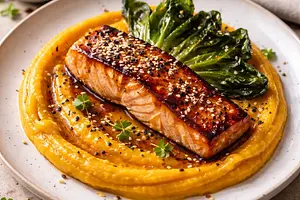
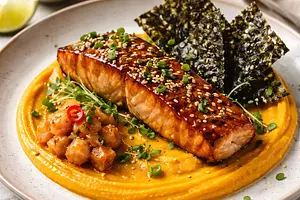
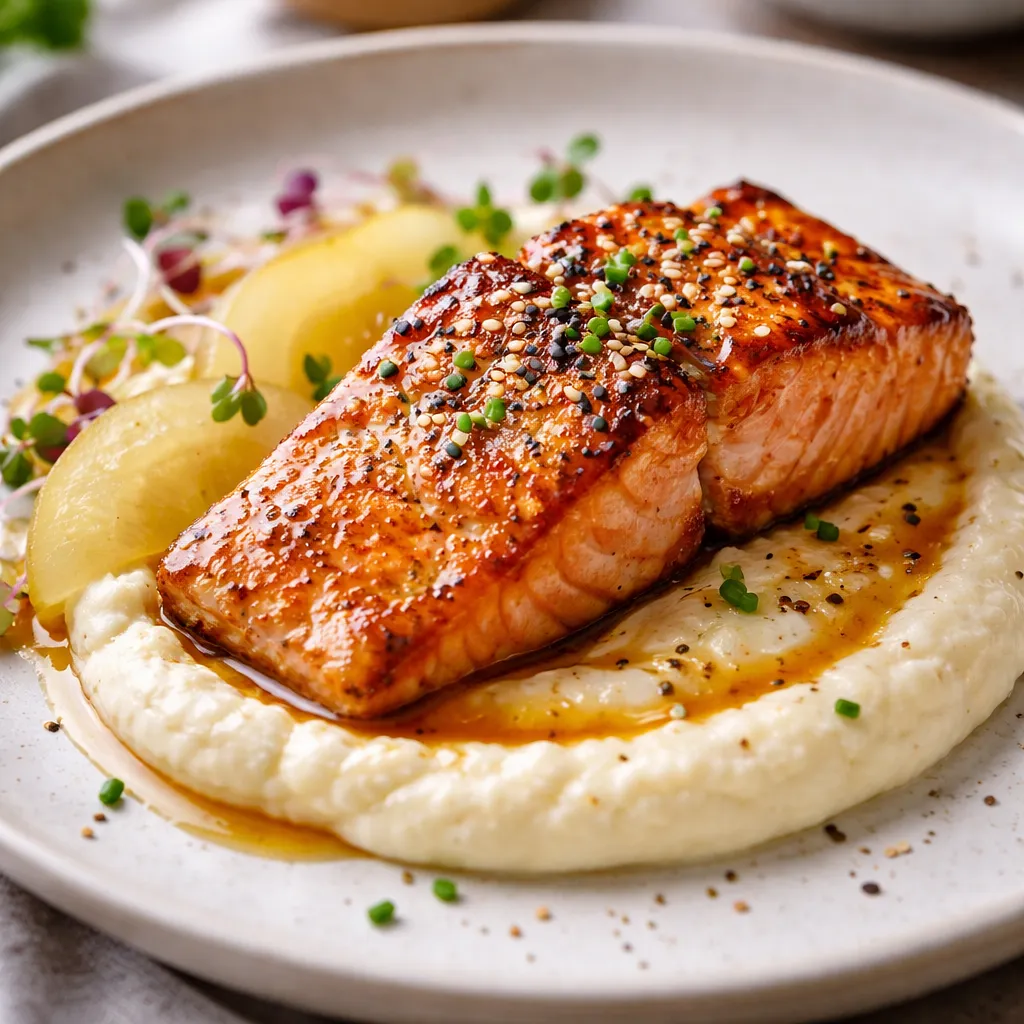
A modern dish of fusion Asian cuisine that combines an intense, sweet-salty glaze made from white miso, the tenderness of baked salmon, and creamy cauliflower purée enriched with a hint of coconut. Seasonal, briefly pickled pear adds juicy acidity and freshness, contrasting with the umami-rich fish. The dish is visually striking — a glossy glazed fillet, a light cream-colored base, and translucent slices of pear decorated with black sesame and microgreens — perfect for a dinner with friends or a modern restaurant menu. Variant 9b18de90 emphasizes seasonality: autumn-winter pears and cauliflower available in the cooler months; serve the dish with light jasmine rice or thin slices of crunchy radishes.
Ingredients Used
Ingredients (21)
- Filet z łososia ze skórą 600 g
- White miso paste 120 g
- Mirin 60 ml
- Light soy sauce 60 ml
- Honey 60 ml
- Sesame oil 15 ml
- Rapeseed oil 30 g
- Garlic 3 ząbki
- Fresh ginger 30 g
- Scallions (chives) 4 szt.
- Cauliflower 800 g
- Butter 30 g
- Pear 1.7 szt.
- Rice vinegar 100 ml
- Sugar 50 g
- Lime 1.2 szt.
- Coconut milk 200 ml
- 🌿 Przyprawy
- Salt 8 g
- Black pepper 4 szczypty
- ✨ Opcjonalne
- Black sesame 6.7 łyżeczek
- Microgreens (mixed sprouts) 30 g
💡 Kliknij na składnik aby oznaczyć jako użyty
Preparation steps
Preparation of ingredients
Pickling Pears
Pour rice vinegar (100 g) into a pot, add sugar (50 g) and 3 g of salt (taken from the total amount of salt). Heat over medium heat, stirring, until the sugar and salt are completely dissolved — this takes about 2-3 minutes. Remove from heat and set aside to cool slightly (about 5 minutes). Cut the pear into thin half-moons about 3-4 mm thick and place them in a glass jar or bowl, pouring the hot but not boiling marinade over them. Let sit for at least 20-30 minutes; for a more intense flavor, you can leave it in the fridge for 1-2 hours. After marinating, the pears should be translucent, slightly shiny, and still firm.
Miso glaze
In a bowl, combine miso paste (120 g), mirin (60 ml), soy sauce (60 ml), honey (60 g), grated ginger (15 g), and grated garlic (5 g). Mix vigorously until smooth and uniform in consistency. Taste a small amount of the glaze (using a teaspoon) and adjust: if too salty — add a tablespoon of honey; if too sweet — a bit of soy sauce. The glaze should be thick, sticky, and shiny.
Cauliflower Purée
In a large pot, bring salted water to a boil (use 3 g of salt from the amount). Add the cauliflower florets (800 g) and cook at a gentle simmer for 8-10 minutes, until the cauliflower is very soft — check with a fork: it should sink in without resistance. Drain thoroughly and set aside for a moment to steam off. Transfer the hot cauliflower to a blender or food processor, add coconut milk (200 ml), butter (30 g), and 2 g of salt, and blend on high speed until smooth, creamy purée (about 1-2 minutes). Season with freshly ground pepper (2 g) and possibly salt to taste. The purée should be silky and smooth — if it is too thick, add coconut milk a tablespoon at a time.
Preparing the salmon
Cut the fillets into 4 equal portions (about 150 g each). Pat dry with a paper towel, and make shallow diagonal cuts on the skin in a few places (do not cut into the meat) to prevent shrinking during frying. Lightly salt the meat (distribute the remaining 3 g of salt thinly over the surface of the fish) and sprinkle with a little pepper.
Frying the salmon
Heat a large skillet (preferably cast iron or non-stick) over medium-high heat. Add canola oil (30 g). When the oil starts to shimmer slightly (about 2 minutes), place the fillets skin-side down. Gently press with a spatula for the first 20-30 seconds to ensure the skin makes even contact with the surface. Cook skin-side down for 4-5 minutes (time depends on thickness) until golden and crispy; the edges of the meat should change color to halfway through the thickness of the fillet. Flip the fillets to the other side and cook for 1-2 minutes just to finish cooking — they should still be pink in the center for juiciness.
Glazing the salmon
1-2 minutes before the end of frying, reduce the heat to medium. Use a spoon to spread the miso glaze evenly in a thin layer over the surface of the fillets (use about 1 tablespoon of glaze per serving). Allow the glaze to caramelize slightly and shine — this will take about 60-90 seconds. Do not let it burn; if the glaze starts to darken, reduce the heat or remove the pan from the heat and finish in an oven preheated to 80°C for 1-2 minutes.
Toasting sesame seeds
In a small dry skillet, toast the black sesame seeds (20 g) for 1-2 minutes over medium heat, shaking the skillet frequently, until they start to release their aroma and pop slightly. Transfer to a bowl and set aside.
Finishing the purée
Transfer the cauliflower purée to a saucepan over low heat, add 1/2 teaspoon of sesame oil (about 7 g) and a few drops of lime juice (about 10 g) — heat very briefly, stirring, just to combine the flavors. Taste and season with salt/pepper if needed. The purée should have a slightly coconut, velvety flavor with a hint of lime.
Preparation of scallions and decoration
From the green part of the scallion, prepare thin strips for decoration. Remove the pickled pears from the jar and drain in a sieve; reserve some of the brine for possible seasoning of the plate. Prepare microgreens for decoration.
Plating the dish
On a warm plate, use a spoon or brush to place 2-3 round portions of cauliflower purée (about 120-150 g of purée per portion), leaving space for the fish. Place the glazed salmon fillet skin-side down on the purée, and arrange 3-4 slices of pickled pear next to the fish. Drizzle with lime juice (about 15 g remaining) and sprinkle with green onions and toasted black sesame seeds. Finally, add a few microgreens for freshness. The whole dish should create a contrast of colors: bright purée, pink salmon, translucent pears, and black sesame accents.
Final suggestions and serving
Serve immediately — salmon is best when it's slightly pink inside and has a crispy skin. The dish pairs well with slightly sticky jasmine rice or thinly sliced raw vegetables (e.g., radish) for added texture. Each portion can be finished with a few drops of sesame oil to enhance the aroma.
Fun Fact
Miso is a soybean paste with a long tradition in Japan; its fermentation can last from several months to several years, which affects the intensity of the flavor. In this recipe, the use of white miso provides a milder, slightly sweet umami profile, perfect for fish.
Best for
Tips
Serve the dish hot, preferably on warm plates. To maintain a contrast of textures, serve the salmon immediately after glazing, and keep the pickled pears chilled until serving. For pairing, I recommend a light dry Riesling or green sencha tea.
Storage: store the purée and glaze separately in the fridge for up to 48 hours in airtight containers; the salmon can be chilled for up to 24 hours, but it's best consumed immediately. Reheating: gently warm the purée in a saucepan over low heat; it's better to reheat the salmon in the oven at 120°C for 6-8 minutes to avoid drying it out. The pickled pear will last 5-7 days in the fridge.
📸 Ugotowane przez społeczność
Zaloguj się, aby dodać zdjęcieDodaj zdjęcie gotowej potrawy
Po zatwierdzeniu przez moderatora otrzymasz 10 punktów doświadczenia.
Nikt jeszcze nie dodał zdjęcia. Bądź pierwszy!
Comments (0)
Be the first to comment on this recipe!
Add a comment