Take the meat out of the fridge 20–30 minutes before cooking to reach room temperature — this will help it cook more evenly. Cut the beef into pieces measuring 3–4 cm on each side: make sure the pieces are similar in size for even braising. Pat the pieces dry with a paper towel - a dry surface will brown better.
Description
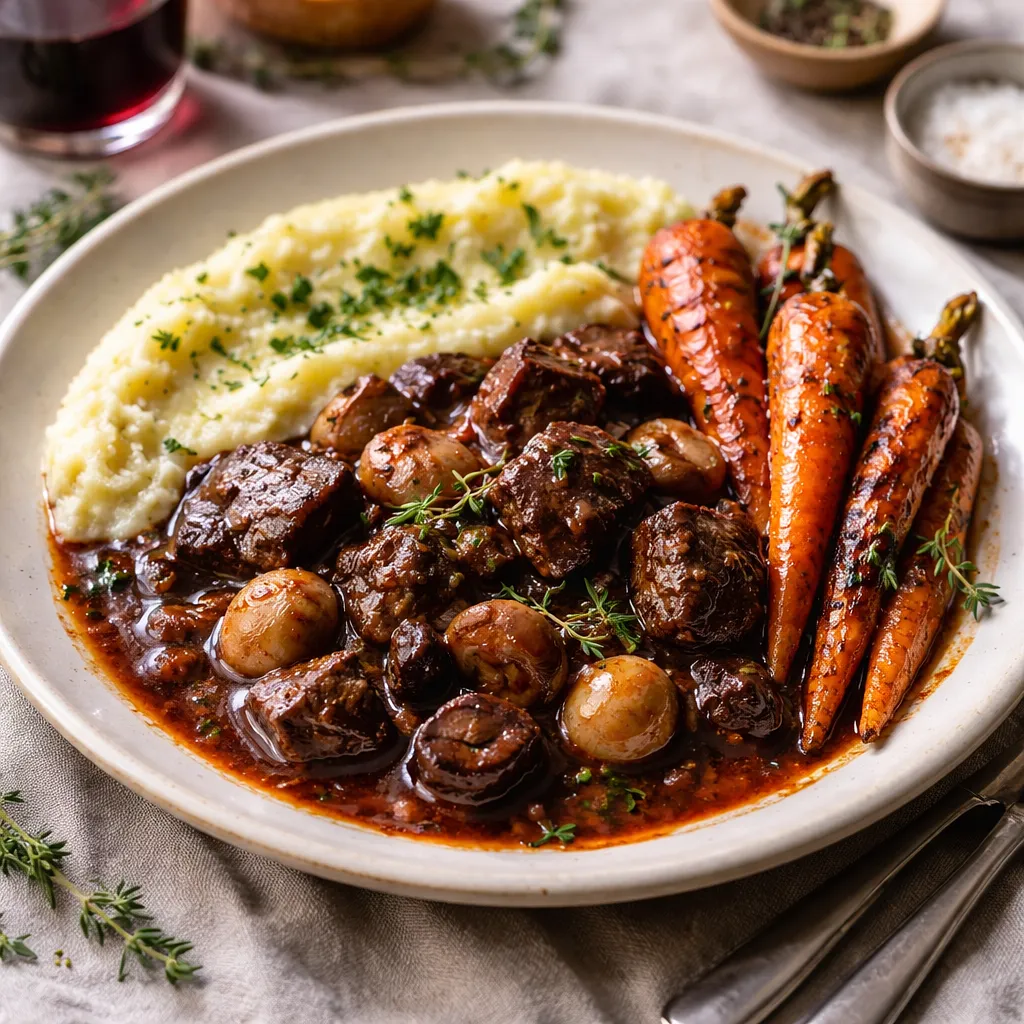
This warming, comfort food dish combines slow-braised, tender beef in a rich sauce of red wine and broth with velvety celery and potato puree and sweet, caramelized roasted carrots. The dish is inspired by classic French braising style (bœuf bourguignon) but simplified for home cooking: the meat gains depth from the wine, aromatic spices, and slow simmering, while the delicate puree softens the intensity of the sauce. Perfect for winter afternoons — it works well as a main course for a family dinner or a small gathering. Serve hot, sprinkled with fresh parsley; optionally, you can add parmesan or drizzle with a bit of balsamic vinegar for contrast. Visually: a dark, glossy sauce enveloping tender pieces of meat and colorful carrots against a backdrop of light puree.
Ingredients Used
Ingredients (21)
- Beef (brisket or chuck) 800 g
- Onion 2 szt.
- Garlic 3 ząbki
- Carrot 3.8 szt.
- Celeriac 400 g
- Potatoes 2 szt.
- Butter 50 g
- Milk 150 ml
- Rapeseed oil 30 g
- Red wine 200 ml
- Beef broth (liquid) 500 ml
- Tomato paste 60 g
- Wheat flour 20 g
- sugar 10 g
- Dried thyme 2 g
- Fresh parsley 15 g
- 🌿 Przyprawy
- Salt 6 g
- Black pepper (ground) 2 szczypty
- Bay leaf 6.7 szt.
- ✨ Opcjonalne
- Balsamic vinegar 15 ml
- Parmesan (grated) 30 g
💡 Kliknij na składnik aby oznaczyć jako użyty
Preparation steps
Preparation of ingredients
Peel and slice the onion into half-moons (cut each onion in half, then slice into thin half-moons). Peel the carrots; cut one part into thick slices for the stew (about 1 cm thick), and from the remaining ones prepare longer pieces (about 4-5 cm) for roasting. Crush or finely chop the garlic.
Preparation - carrots for roasting
Preheat the oven to 200°C (top-bottom). Drizzle the carrots intended for roasting with 1 tablespoon of rapeseed oil (15 g) and lightly salt. Arrange them on a baking sheet lined with parchment paper in a single layer. Roast for 25–30 minutes until they are tender and the edges are slightly browned — halfway through, turn them to ensure even browning.
Frying the meat
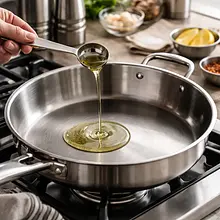
Heat a large, heavy skillet or cast-iron pot over medium-high heat. Pour in 1 tablespoon of oil (15 g). Dust the pieces of meat evenly with flour (just enough to lightly coat them) and shake off the excess flour. Sear the meat in batches (to avoid overcrowding the pan) for 3–4 minutes on each side until the pieces are well browned — they should have a dark brown, slightly crispy crust. After browning, remove the meat and set it aside on a plate.
Frying vegetables
In the same pan, add another tablespoon of oil (15 g) if needed. Add the chopped onion and sauté over medium heat for 6–8 minutes until it becomes translucent and lightly browned. Add sugar (10 g) and cook for another 2 minutes until the onion starts to caramelize. Add garlic and sauté for 30 seconds until it releases its aroma — be careful not to burn it.
Deglazing and sauce base
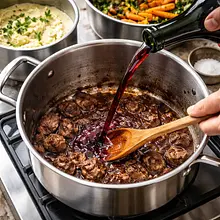
Increase the heat to medium-high and pour in the red wine (200 ml) — use a wooden spoon to scrape up all the browned bits from the bottom of the pot (that's a lot of flavor). Cook the wine for 3–4 minutes until the alcohol partially evaporates and the liquid reduces in volume by about 25%. Add the tomato paste (60 g) and stir, then pour in the broth (500 ml). Toss in the thyme (2 teaspoons dried), bay leaves (2 pieces), part of the carrots intended for the stew, and return the browned meat to the pot.
Stewing
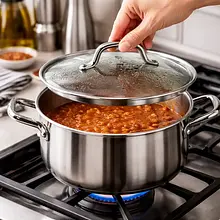
Bring everything to a gentle boil, cover with a lid, and reduce the heat to very low (simmer). Stew the goulash for 1.5–2 hours, stirring every 20–30 minutes. The meat is ready when it easily pulls apart with a fork and the sauce is thick and glossy. If necessary, remove the lid for the last 15–20 minutes to reduce the sauce.
Celery-Potato Purée
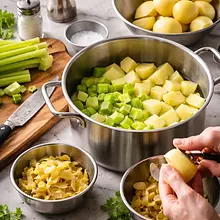
While the vegetables are simmering, prepare the puree: peel the celery and potatoes, and cut them into even pieces. Place them in a large pot and cover with cold water. Add a pinch of salt (about 1 g). Bring to a boil, then cook over medium heat for 20–25 minutes, until the vegetables are soft (a fork should easily pierce them). Drain, reserving a small amount of the cooking water. Heat the milk (150 ml) and butter (50 g) in a small pot until warm (not boiling). Mash the celery and potatoes with a potato masher or an immersion blender, gradually adding the warm milk and butter until you achieve a smooth, creamy consistency. Season with salt and pepper to taste.
Finishing the goulash
After 1.5–2 hours of simmering, check the tenderness of the meat. Remove the bay leaves and season the goulash to taste with salt (up to 6 g) and pepper (2 g). If the sauce is too thin, cook uncovered over medium heat for 5–10 minutes until it thickens; if too thick, add a bit of broth. You can also add 1 teaspoon of balsamic vinegar (15 g) — optionally — to enhance the flavor.
Serving
On a plate, place a portion of celery-potato puree (about 200–220 g per person), next to it, serve a portion of goulash with sauce (about 200 g of meat with sauce). Add 2–3 roasted carrots as a colorful accent. Sprinkle everything with finely chopped parsley (15 g). If using, lightly sprinkle the puree with grated Parmesan (30 g) and drizzle the goulash with a bit of balsamic vinegar (15 g). Serve hot.
Final tips
If you prepare the dish in advance, the stew tastes even better after a night in the fridge — the flavors meld together. Before serving, heat slowly over very low heat, adding a bit of broth if the sauce has thickened. Gently heat the puree in a water bath or over low heat with a little milk to avoid burning.
Fun Fact
Dishes braised in red wine originate from French cuisine (e.g. bœuf bourguignon), where slow cooking in wine and broth allows for a deep flavor to be developed from inexpensive cuts of meat.
Best for
Tips
Serve the goulash hot, immediately after plating the puree — it pairs well with red wine (the same notes used in cooking). For a flavor contrast, add a slightly tangy spicy cucumber or simple pickles as a side dish.
Store the stew and puree in airtight containers in the refrigerator for up to 3 days. The stew can also be frozen (for up to 3 months) — thaw slowly in the refrigerator and reheat over low heat. It's better to store the puree separately, as it may change texture after freezing; when reheating, add a little milk to restore its creaminess.
📸 Ugotowane przez społeczność
Zaloguj się, aby dodać zdjęcieDodaj zdjęcie gotowej potrawy
Po zatwierdzeniu przez moderatora otrzymasz 10 punktów doświadczenia.
Nikt jeszcze nie dodał zdjęcia. Bądź pierwszy!
Comments (0)
Be the first to comment on this recipe!
Add a comment